

Picture this
Your garden roses are your favorite. You wait all winter for your roses to start producing again. When spring finally comes around and the bushes leaf out, things look different. Large black spots with feathery, spiderweb-like borders spread all over the leaves. The spots seem to be getting larger, and many of the leaves start to yellow. Soon the leaves drop, and the flowers look less vibrant, smaller, and distorted. You look around, and what you assumed was only on one plant, is actually spreading to all the other roses in your garden.
Is this actually happening right now in your garden?
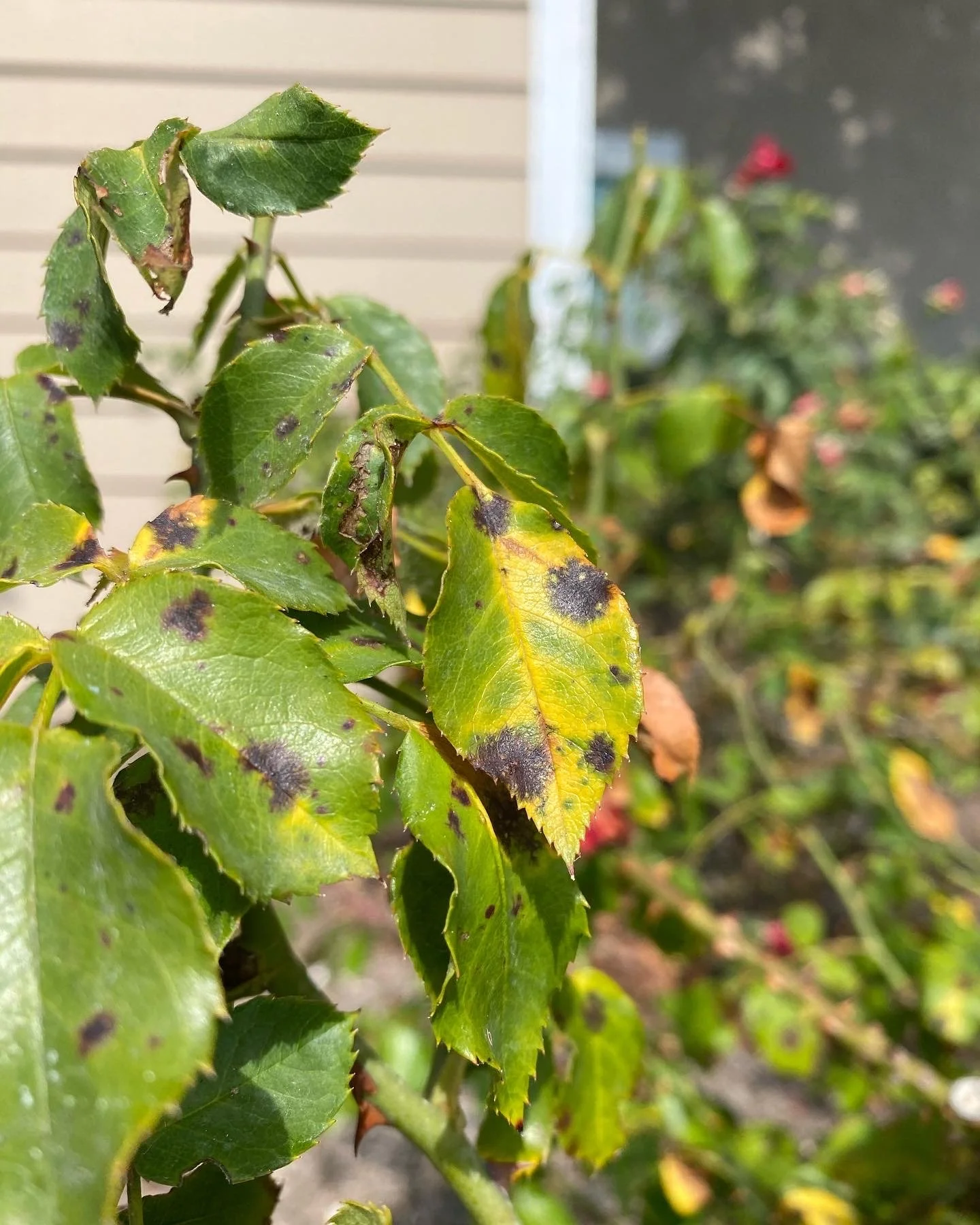
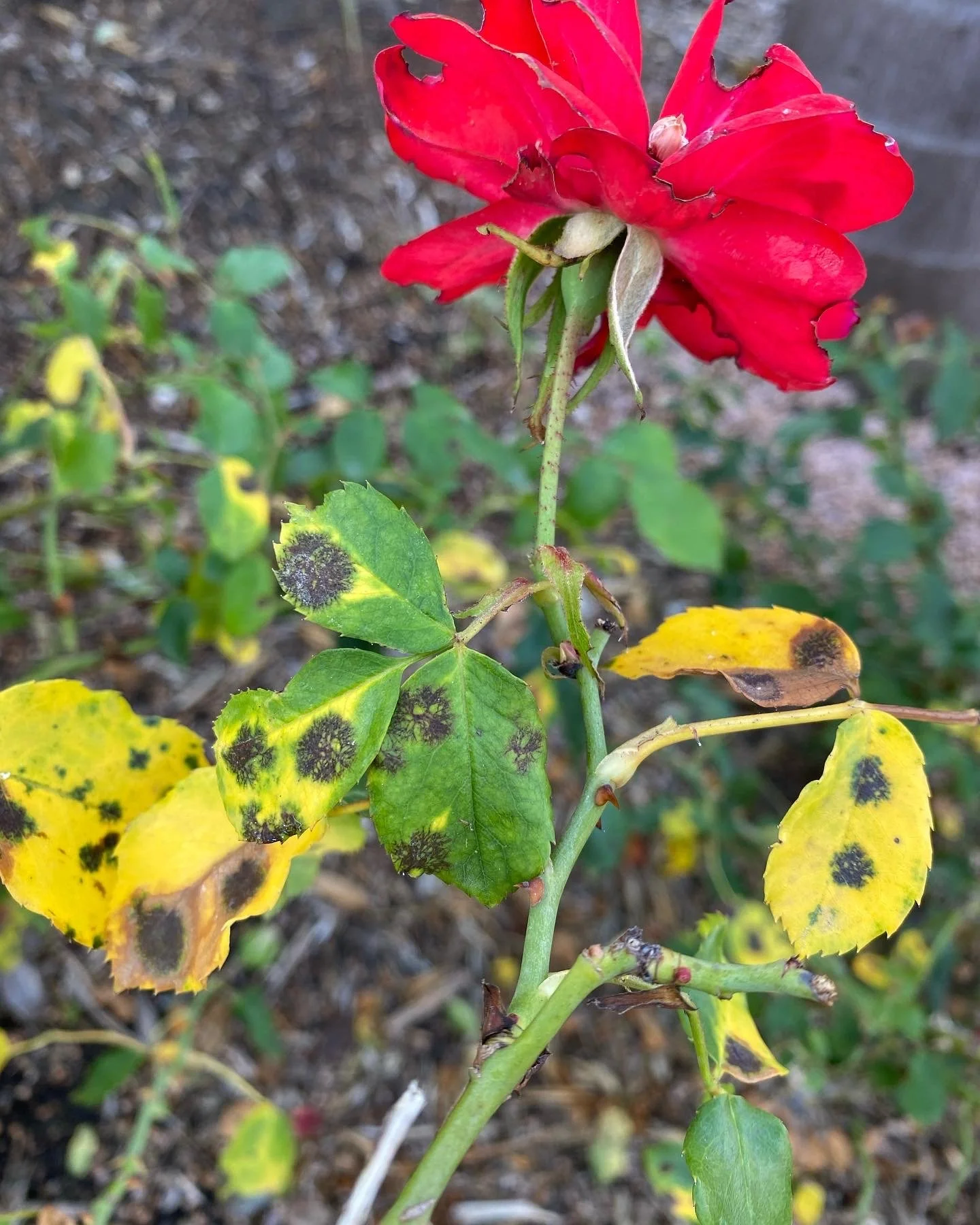
Black spot on rose. Photos by A. Beissinger
Is there a fungus among us?
Black spot is one of the most common diseases of roses in the world. Caused by the fungus Diplocarpon rosae, black spot can develop anywhere that roses grow. The disease is most detrimental to roses in wet or humid environments, and can spread easily through rain splash or irrigation. The cool, wet spring conditions of the PNW are ideal for black spot development. As leaf spots grow, the plant will begin to shed its leaves, leading to early defoliation and bare plants. Without leaves, the plants lack energy and food, and lose vigor. Wind, insects, and tools can all spread the infection as well.
Black spot is a polycyclic disease, meaning that the fungus can continuously reinfect roses at any point during the season. This characteristic is one reason why it makes the disease difficult to manage.
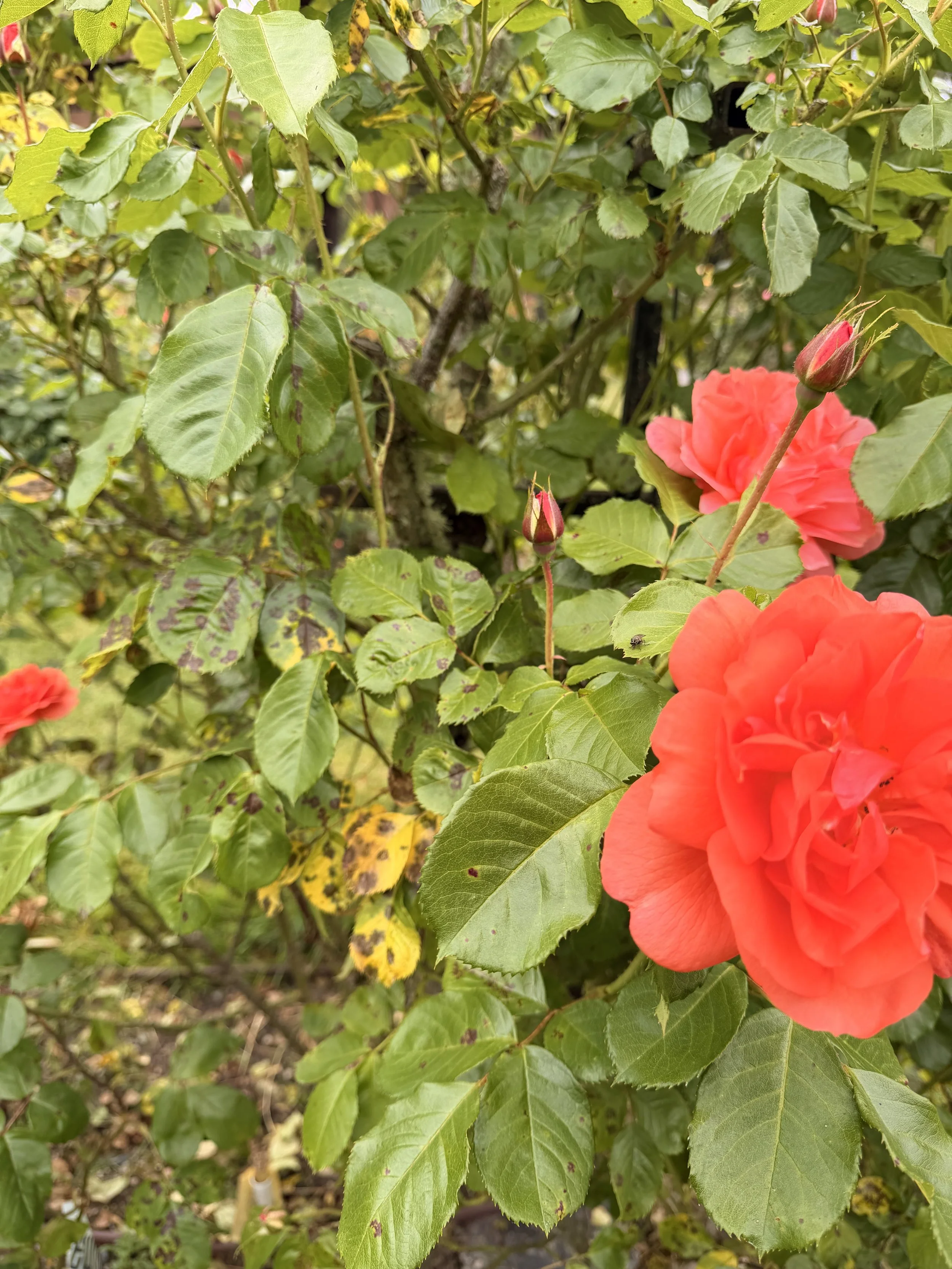
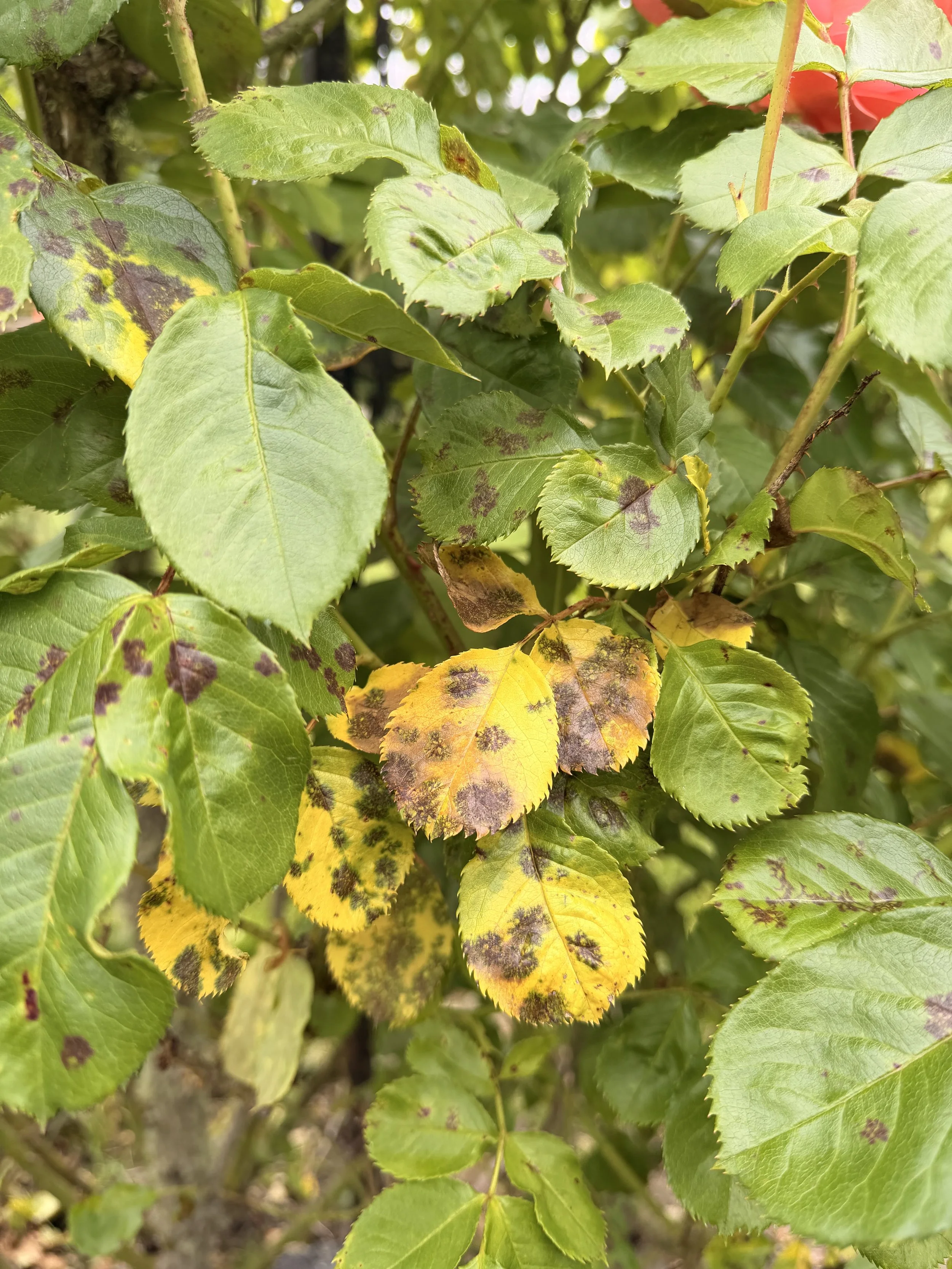
Feathery-margined leaf spots, with yellowing leaves. Photos by J. Gentry.
D. rosae can overwinter on plant debris, canes, and fallen leaves, especially in the PNW where a hard freeze does not always happen. If the infected debris or canes are not removed, the fungus is primed and ready to infect in the spring once temperatures rise above 50 °F and leaves remain wet for more than 7 hours.
Cultural Control Options
There are some organic fungicides that have been developed to control black spot, but none have shown much efficacy at control. Many conventional fungicides are rated to work against black spot, but have varying levels of control as well. To manage black spot, especially in the home garden, follow these cultural control recommendations:
Plant Resistant Varieties
Several rose cultivars have been developed (using traditional breeding methods) for resistance against black spot. However, D. rosae exhibits high genetic variability, and a rose variety deemed to be resistant in one location may be susceptible in a different place due to the presence of different fungal strains.
If you are fed up with black spot management and looking to replace your susceptible varieties in the PNW, consider trying these varieties instead:
| CareFree Spirit | Electron | Helmut Schmidt |
| Just Joey | Keepsake | Las Vegas |
| New Day | New Year | Love |
| Peter Frankenfeld | Polarstern | Precious Platinum |
| Dortmund | Dublin Bay | Royal Sunset |
| Bonica | Escapade | Iceberg |
For more options and information about rose cultivars and their resistance to certain diseases and pests, visit the PNW Pest Management Handbook.
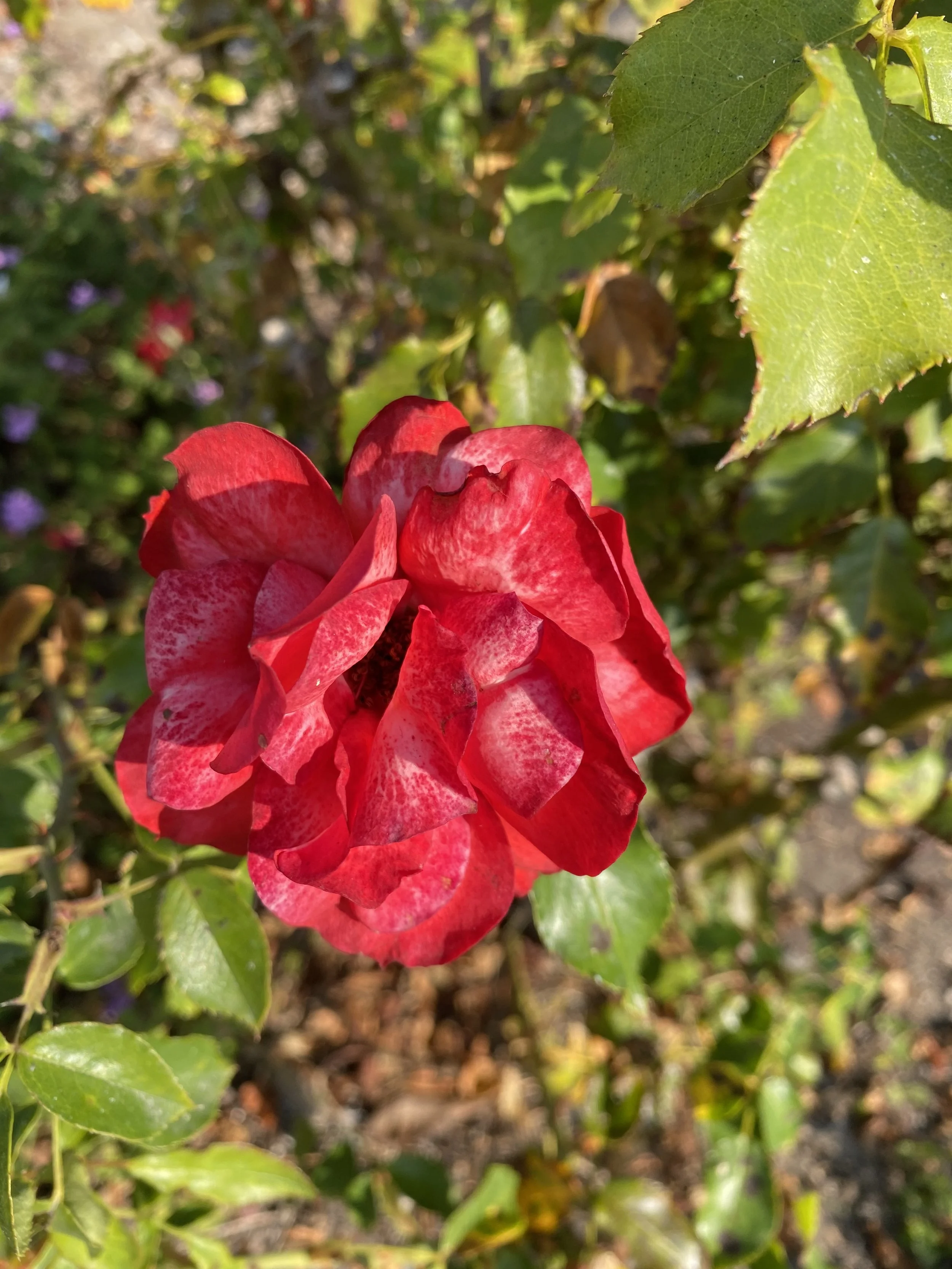
Distorted bloom. Photo by A. Beissinger
Avoid practices that keeps your roses wet
Because the disease thrives when leaves remain wet, modify your planting system. Plant roses in full sun, maintain even spacing between plants and within plant canopies, avoid overhead watering, and only water in the early morning so leaves have a chance to dry out throughout the day.
Remove all rose foliage at the end of the season
To attempt to break the overwintering cycle, remove and rake up all rose foliage at the end of the season. Prune canes back if you see that they are infected. Place the debris in a municipal yard waste bin and NOT in your back yard compost pile (at-home compost piles do not reach temperatures hot enough to destroy spores).
Do you think you might have black spot?
We can develop a custom management plan for your roses to keep them vibrant for years to come. Schedule a site visit or book a video consultation today!