

Was your apple tree defoliated last year, with nothing but the apples left on the naked tree? Chances are, it was apple scab. Apple scab is the most common and damaging fungal disease of apple in western Washington, and is fairly easy to spot if you know what to look for.
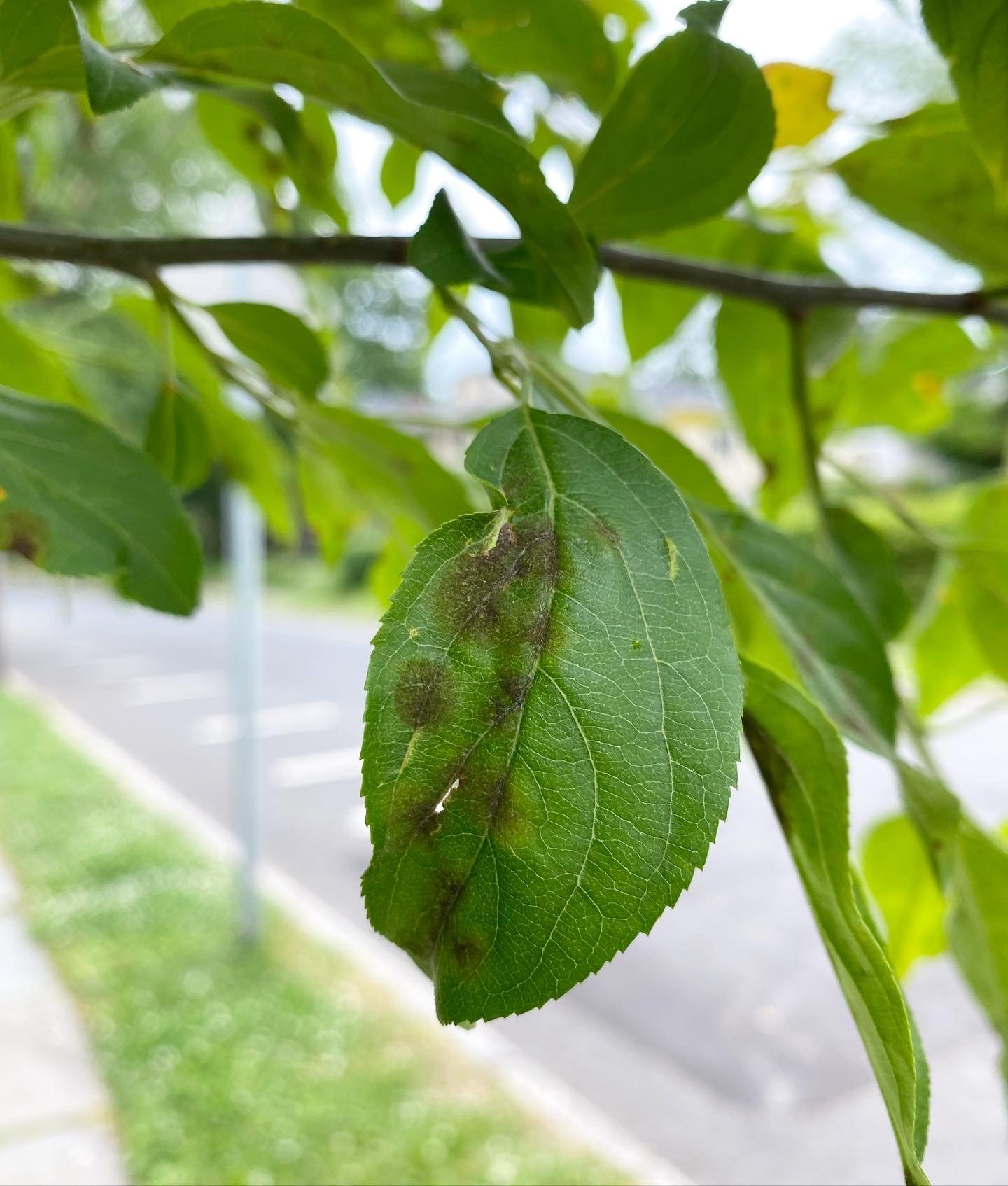
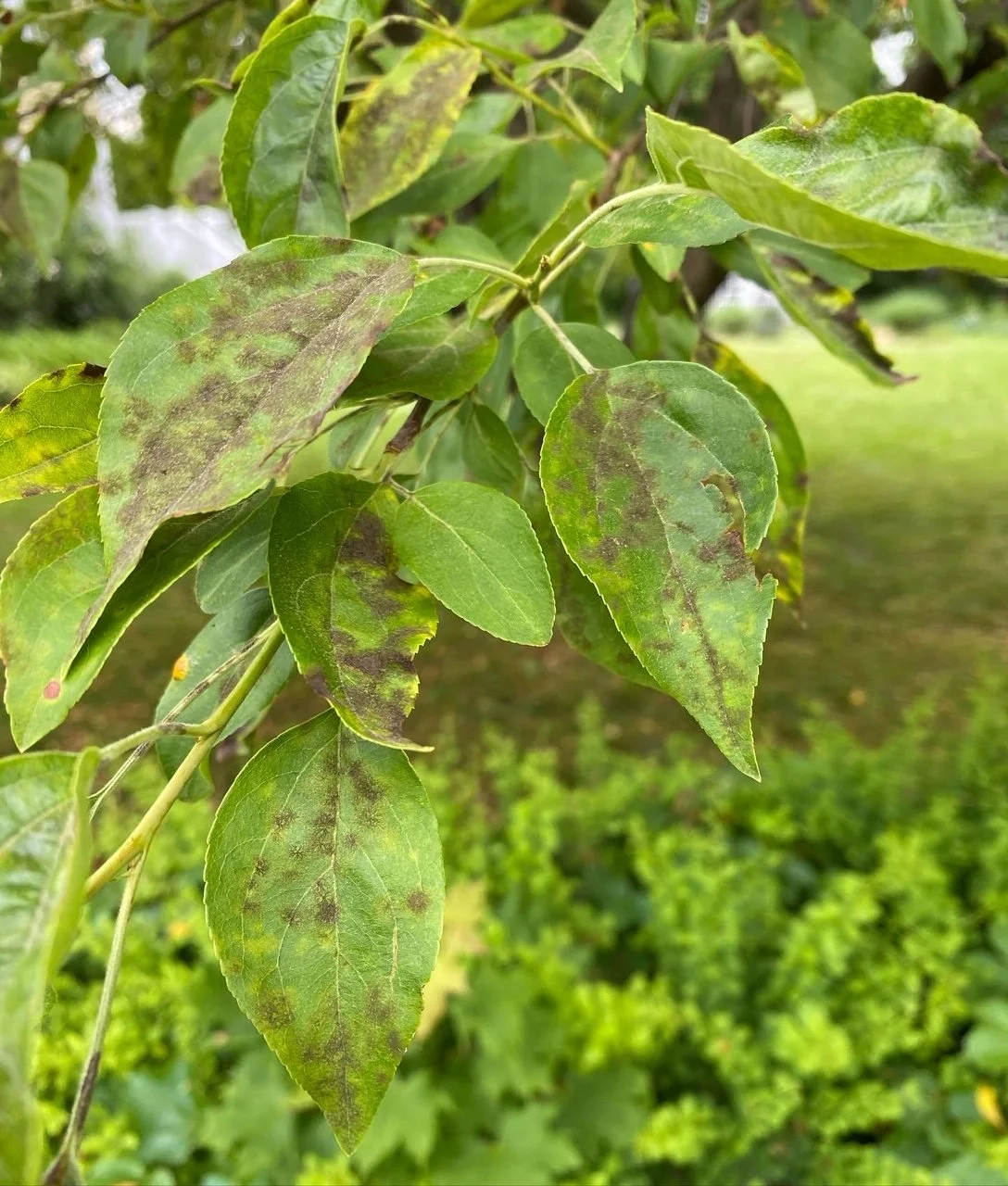
Initial apple scab lesions. Photos by A. Beissinger.
What is Apple Scab?
Apple scab is a fungal disease caused by Venturia inequalis. You’ll first see infections starting in late May or early June in western Washington. Other species of Venturia fungi infect pear and willow as well (Venturia pirina and Venturia saliciperda, respectively), and cause similar signs and symptoms. It is important to note that though infections caused by Venturia fungi look similar, each species is very host specific and will not infect if their host plant is not present.
On apple and crab apple, infection first occurs at bud break, but is not usually detectable at this stage. Trees flower well. Fungal spores are spread by rain-splash and wind. The first signs of infection are olive green to black lesions on susceptible leaves (photos above). Though these lesions look like spots of the leaves, they are actually the fuzzy spores of the fungus. As the fungus develops, the lesions grow in size and the infected leaves begin to yellow. Once completely yellow, the leaves will prematurely drop from the trees. Leaves can turn so yellow that they are sometimes confused for early fall color or water stress. Diseased leaves that remain on the ground can continue to infect the tree throughout the season. When the trees set fruit, black, scabby raised spots will appear on the skin.
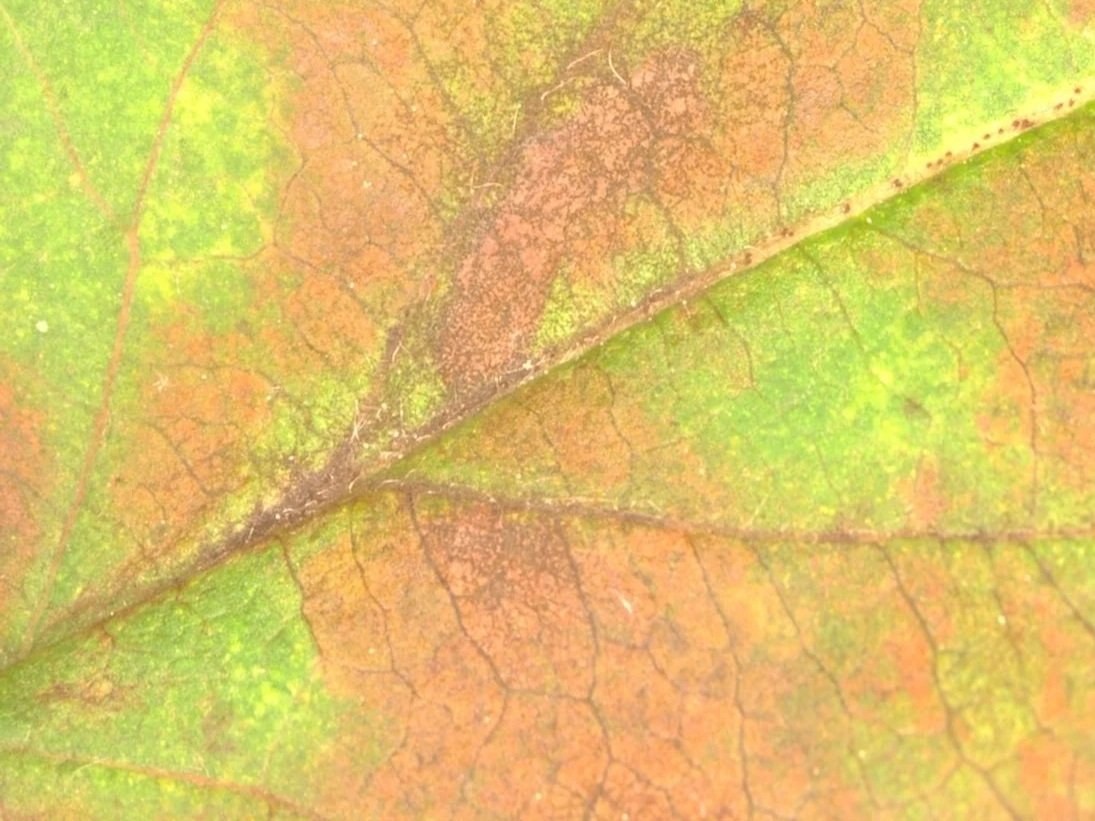
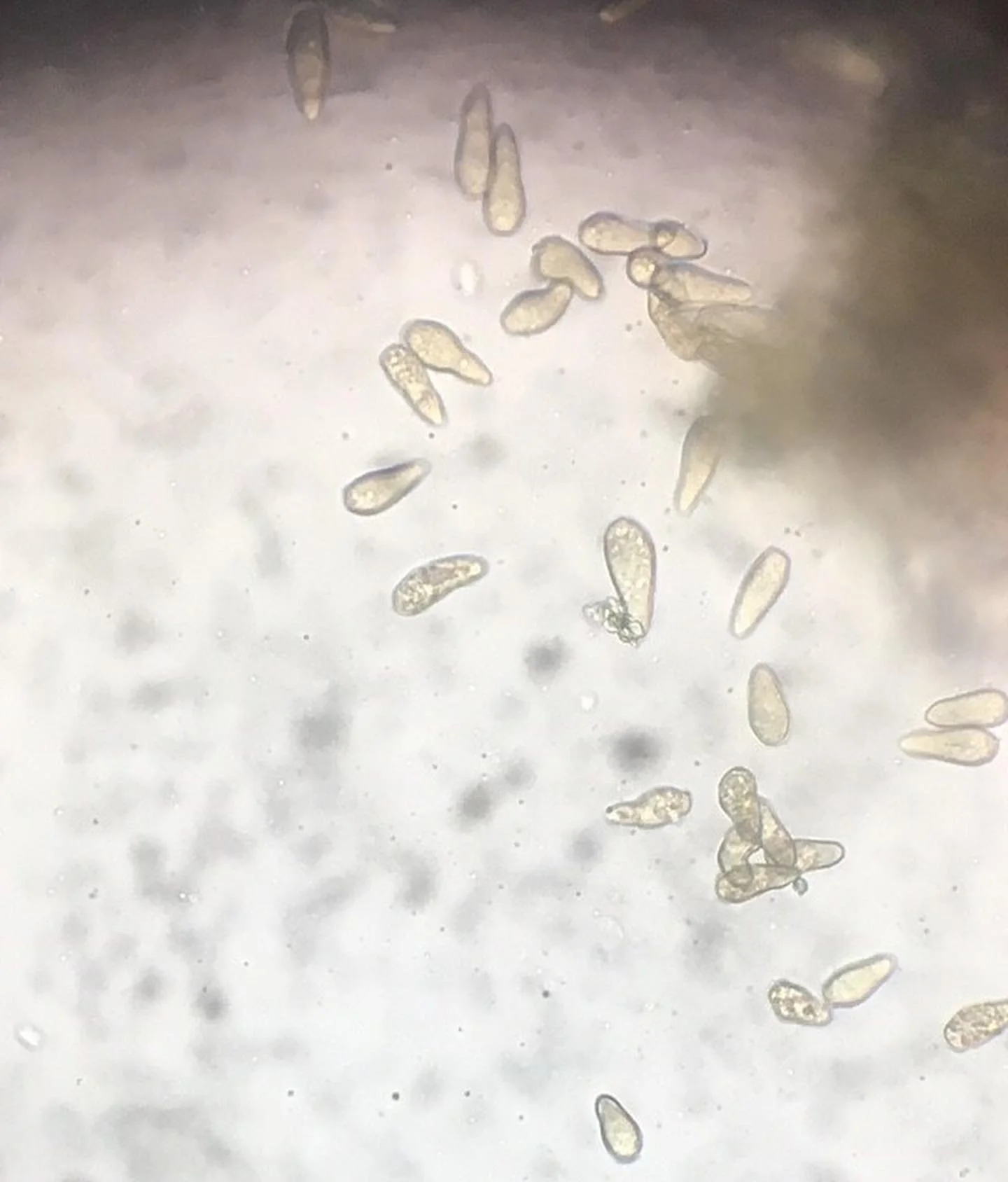
Magnified lesion on the leaf. Note the velvety appearance of the spores (left), and spores of Venturia pirina (right). Photos by A. Beissinger.
What are management strategies for apple scab?
Apple scab is usually more of a concern to commercial apple growers because the disease reduces fruit yield and fruit quality, and because the disease can infect many times throughout the growing season. As a result, most apple orchards have either a regular spray program or other means of preventative apple scab management. Typically, this could include using repeated applications of conventional or organic fungicides, or planting resistant cultivars. If an orchard treated just once for apple scab, the infection could easily reemerge only a few days later, wasting time, money, and apples! Over several years, repeated defoliation can eventually lead to the death of the tree if apple scab goes unmanaged.
In a home setting, one of the most important management strategies is to rake up fallen leaves. The fungi overwinter in leaves and fallen debris, and can easily reinfect trees next season if you are not careful about your sanitation. Only compost leaves if they will be sent to a municipal composting facility—at home compost piles do not usually get hot enough to kill the spores of the fungus. There are organic chemical products that can be used as a preventative for apple scab, but once the tree is infected, these products will not help. Only consider fungicides in the spring of your 3rd year that the tree has been completely defoliated.
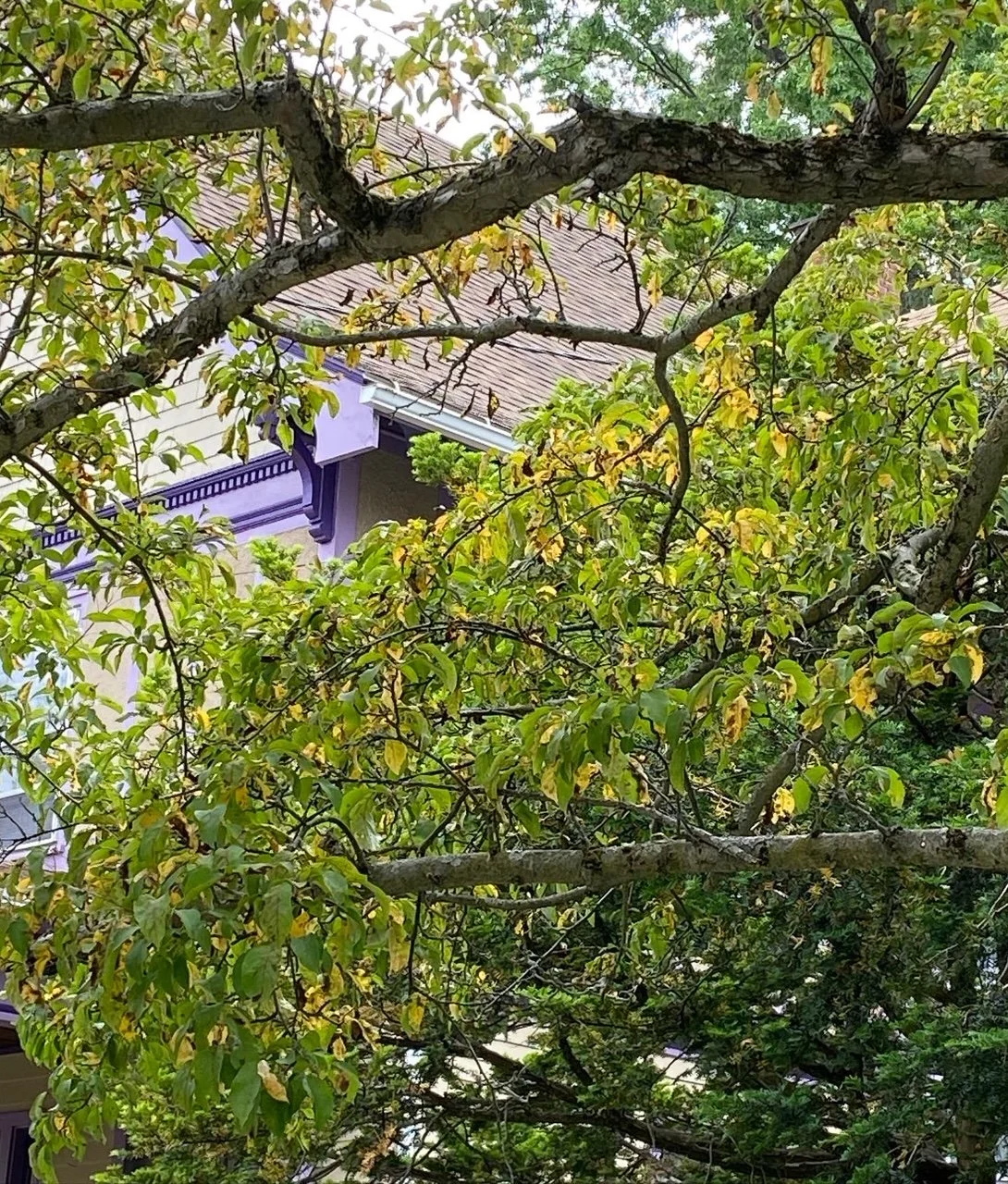
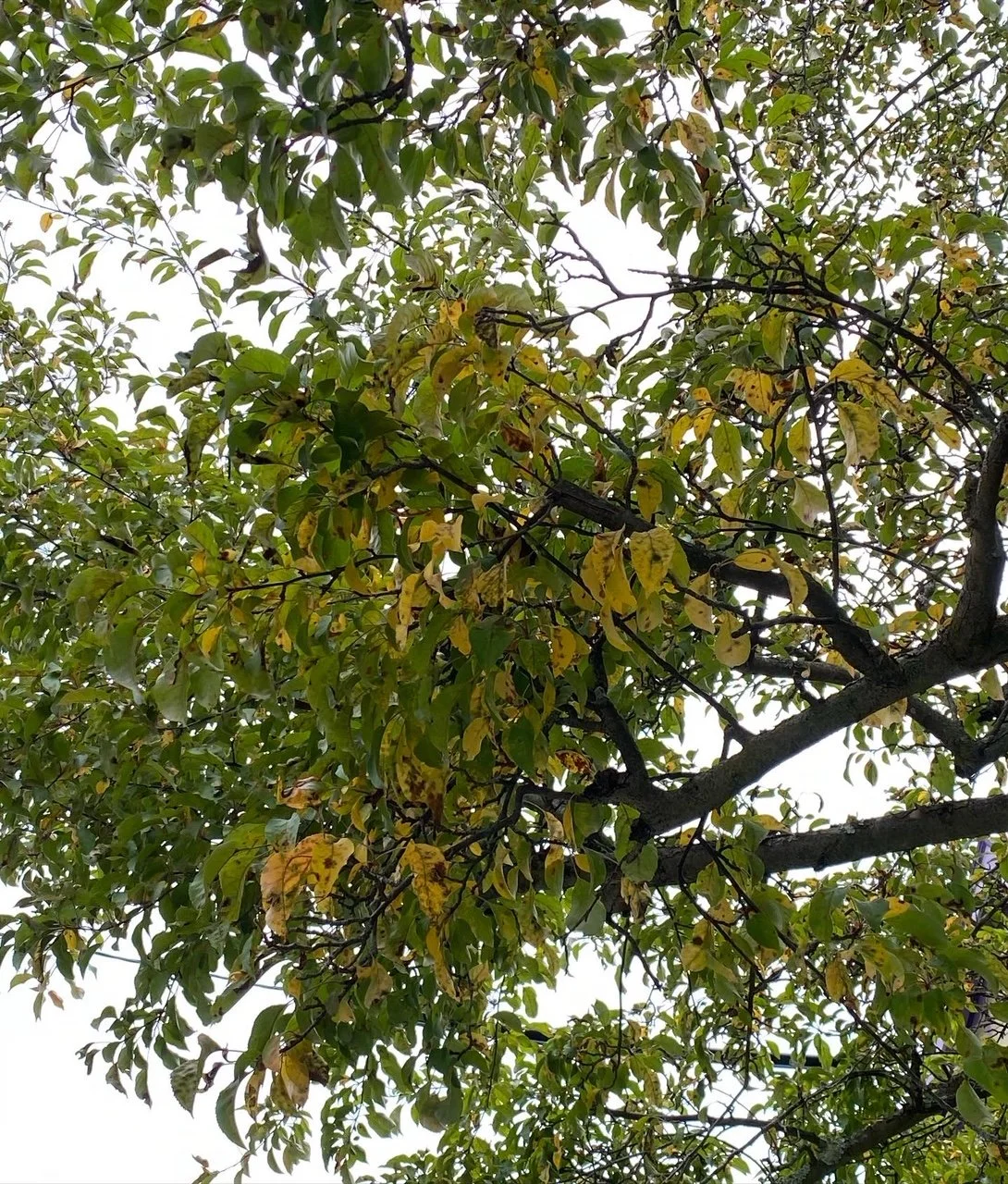
Apple scab infected leaves will often turn completely yellow before dropping. beginning to yellow. Photos by A. Beissinger.
Resistant Apple Varieties
If you are at the stage of planting new apple trees and want to choose varieties that have been developed to resist apple scab, the PNW Pest management handbook recommends the following varieties:
Akane (Tokyo Rose)
Chehalis
Enterprise*
Liberty
Prima
Pristine*
*denotes apple scab and powdery mildew resistance
Do you think your tree might have apple scab?
Contact us to learn more about what you can do to prevent apple scab this year, and schedule a site visit!