

I have to admit, I get somewhat excited when I see the first fuzzy powdery mildew spots of the season appear. It’s almost like playing the plant pathology lotto, betting when the environmental conditions (warm, dry days followed by cool, humid nights) are just right for the fungi to cause disease. This year, I predict we’ll see the first signs of infection around June, but we’ll just have to wait and see.
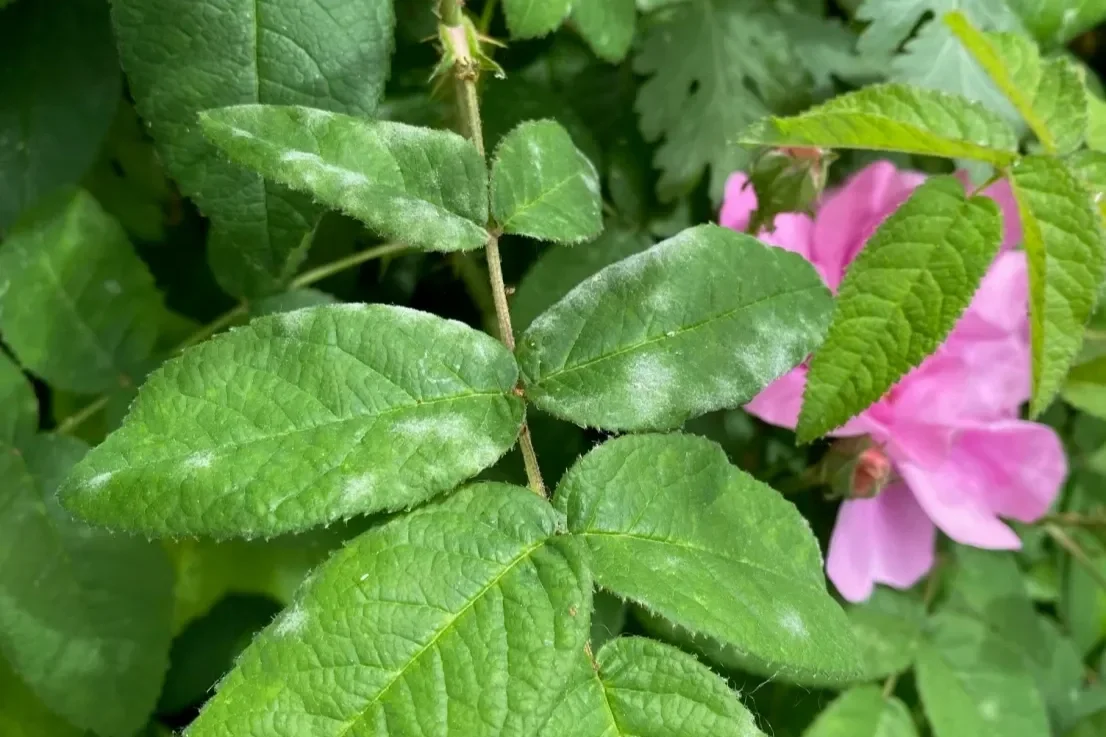
Powdery mildew on rose. Photo by A. Beissinger.
But what is Powdery mildew, anyway?
Powdery mildew is a disease caused by several different species and genera of fungi. Though you may see powdery mildew on many different plants at once, each species of powdery mildew fungi is very host specific. The powdery mildew on your cucumber plant is not spreading to your maple tree. However, you hit the powdery mildew jackpot and happen to have more than one species in your yard. In the lab, we identify the fungus to genus based on characteristics of their overwintering structures (chasmothecia).
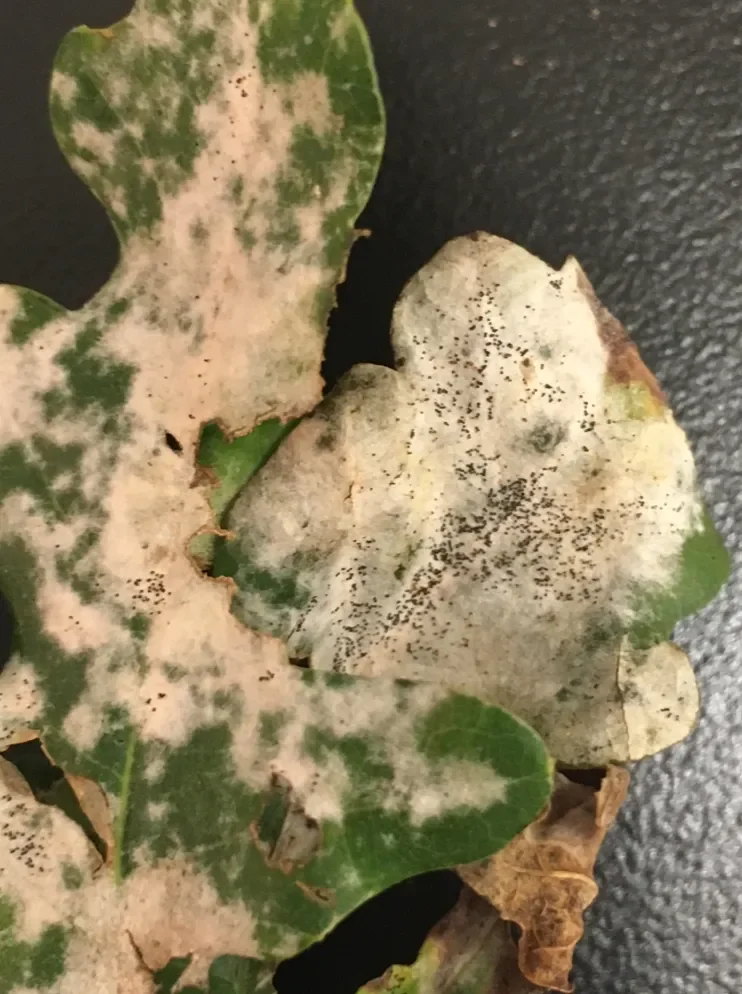
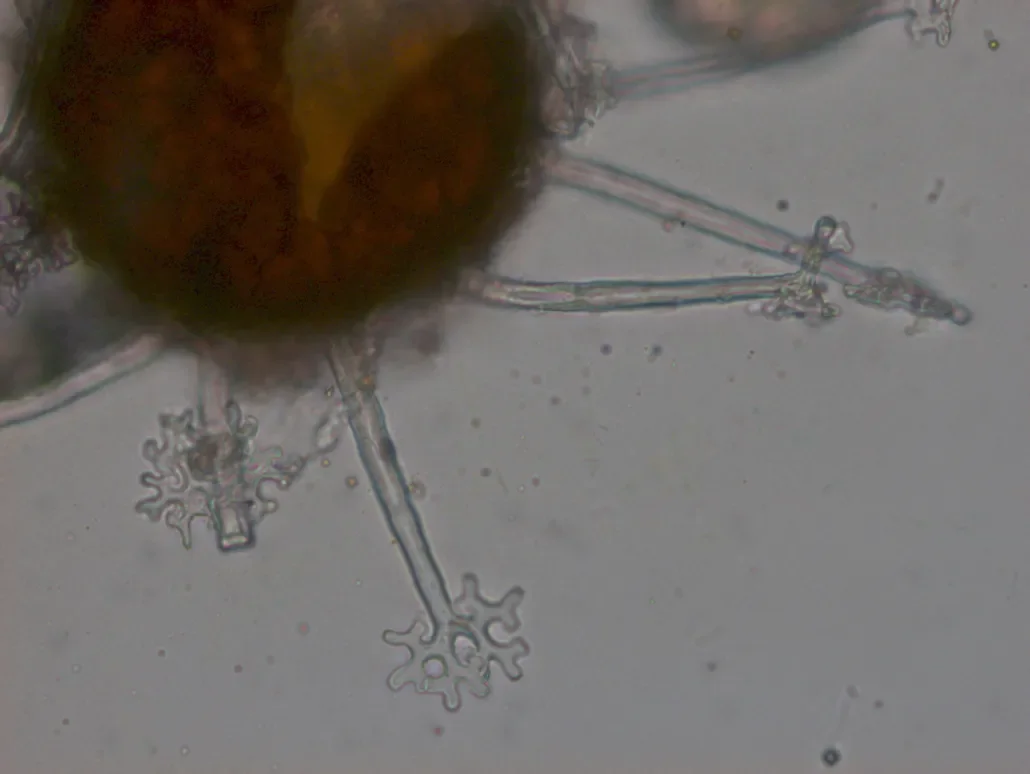
Overwintering structures (chasmothesia) on English oak (the black specks on the leaf) (Left). Powdery mildews are identified based on the shape of the structures inside the chasmothecia. Pictured here is Ersiphe sp., which causes disease on many woody ornamentals like dogwoods, lilac, and sycamore. Photos by A. Beissinger.
once you have powdery mildew, what should you do?
Due to the biology of powdery mildew fungi, management of the disease is not as simple as spraying something to make it go away (and frankly, no plant disease management is ever that simple…). Powdery mildew fungi are obligate parasites, meaning they require a living host plant to grow, obtain nutrients, and thrive. If they kill their host plant, they would not survive. So, powdery mildews keep their host plants alive, and on woody and ornamental perennials, powdery mildew only causes aesthetic damage. It will not jeopardize the health of your plants unless they undergo severe and repeated infection for multiple years. In a backyard garden setting, it’d be more useful for to save your money and not spray a product into the environment that will have little to no success at controlling the disease.
The answer about chemical controls is a bit different for fruit and vegetable crops such as apple, grape, and cucurbits. While powdery mildew doesn’t necessary kill the host plants, the disease can present challenges for fruit quality, consistency, yield, and taste. Fruit can be deformed, have blemishes, or other markings that render them unmarketable, and produce far less than normal. In these cases, and if you are selling the crops for market, we may recommend a sulfur, neem oil, triforine, or potassium bicarbonate product, depending on the production system. Always read the pesticide label before applying any product, and please note that chemical controls are usually only effective when appropriate control strategies are taken as well.
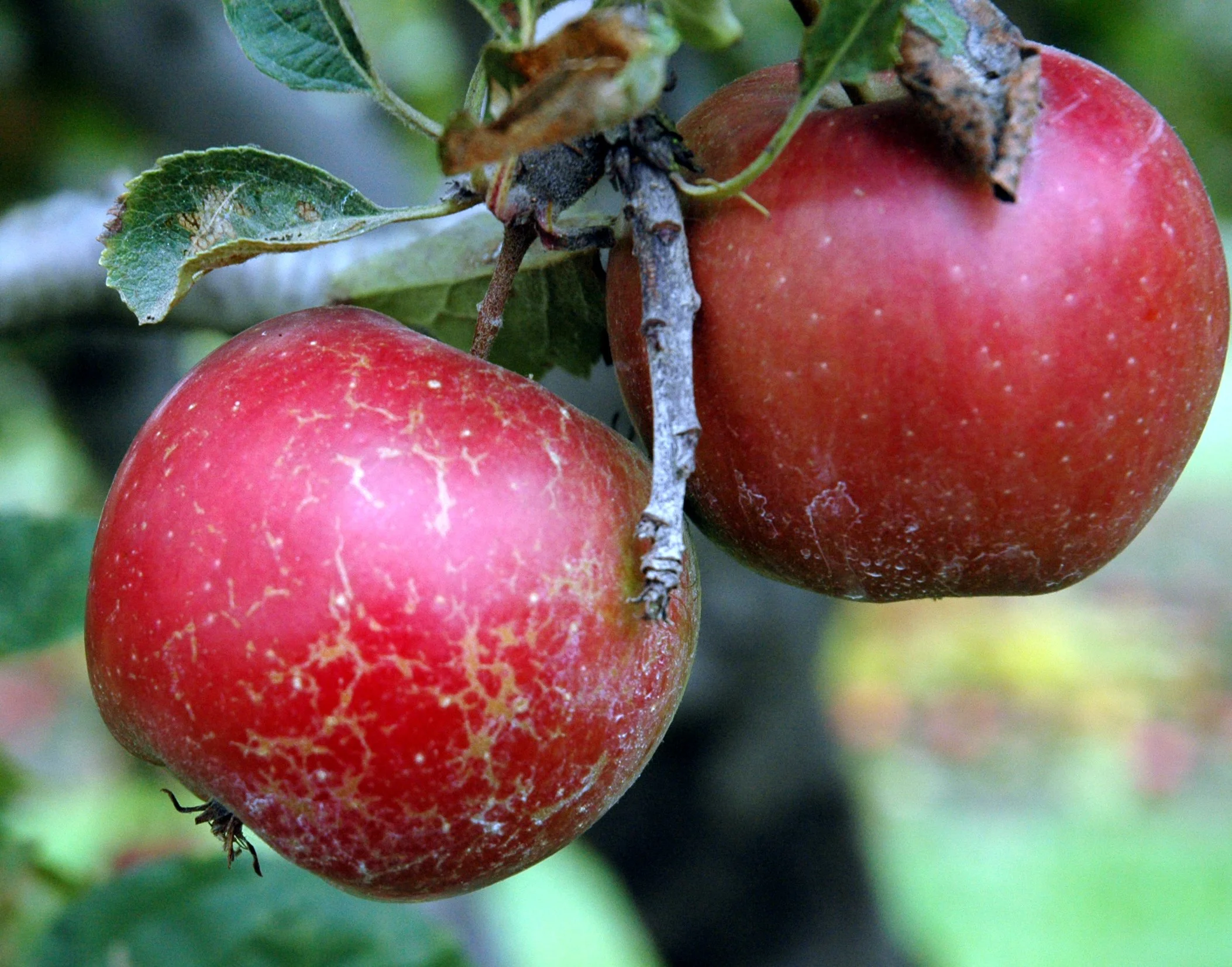
Damage caused by apple powdery mildew. Photo by J. Pscheidt
What are Powdery Mildew Control strategies?
I’m so glad you asked!
Start off with resistant cultivars. Selecting plant varieties that have resistance to powdery mildew is one of the most important strategies to help prevent infection. There are many options to choose from, but it does require you to plan ahead before you begin planting. Garden centers and seed catalogues can be very helpful.
Space plants adequately. Dense plantings can increase humidity, which can in turn increase disease development. Remove plants to improve airflow.
Avoid overhead watering. Using a soaker hose, drip irrigation, or watering plants only at the base can help decrease humidity in the planting.
Thoroughly clean up all infected plant parts at the end of the season. Many herbaceous perennials are left by gardeners to maintain fall habitat for pollinators. However, removing all infected plant parts at the end of the season will decrease the amount of fungal inoculum able to overwinter and infect plants the following year. Do not compost infected plants, because compost piles often do not reach temperatures high enough to kill the fungus.
Powdery Mildew Look-Alike Disease
The “fuzzy” white powdery mildew growth you see ( mycellium) typically grow on the upper leaf surfaces of plants, and unlike other fungi, will not grow when a film of water is present on the leaves. Occasionally, mycelium will grow on the lower leaf surface, but that is less common. If you’re seeing powdery white-grey spots only on the lower leaf surface, more than likely you’re seeing downy mildew, which is a far more serious disease. These diseases are often confused for each other because of their name and appearance. Downy mildew is caused by an oomycete rather than a fungus, and spreads when water is present. Early action is required to save your plants. Stay tuned for another blog on Downy mildew!
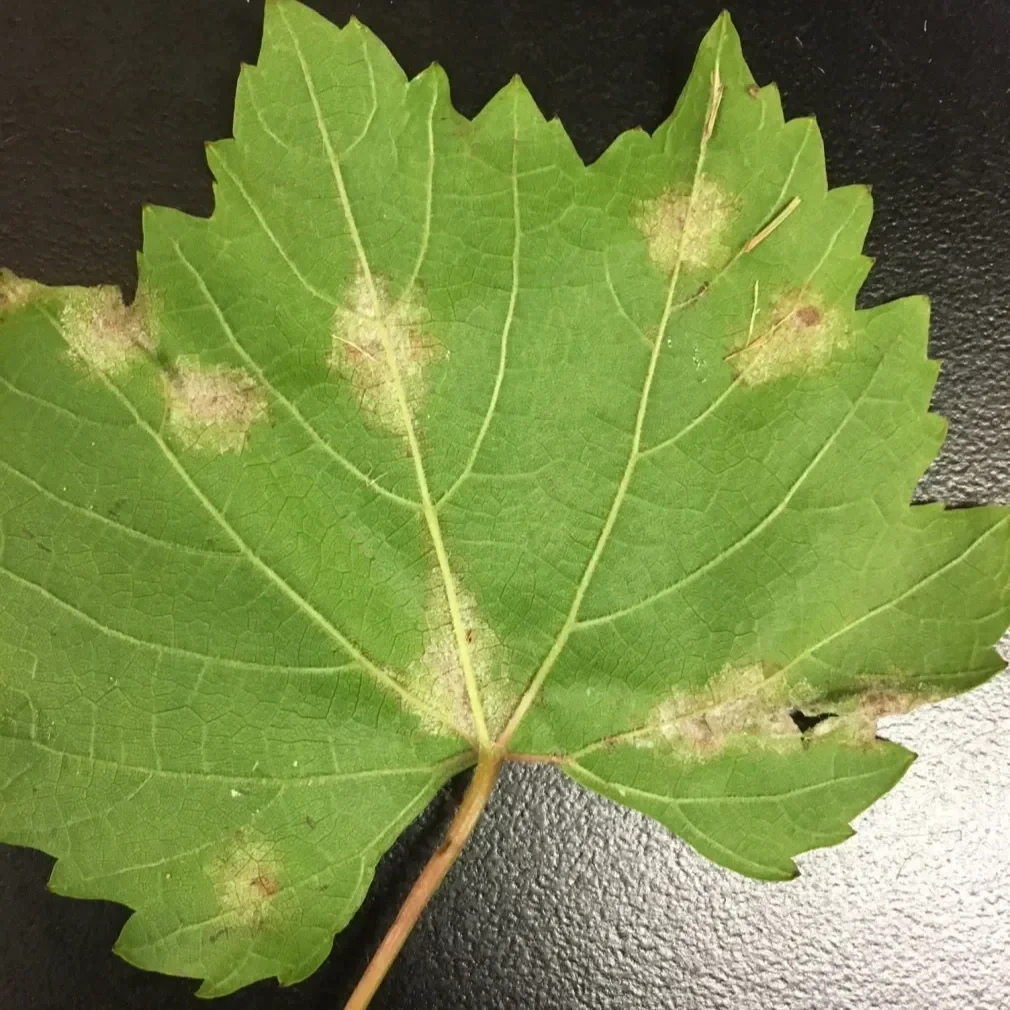
Downy mildew on grape. Note the spores are present only on the lower leaf surface. Photo by A. Beissinger.